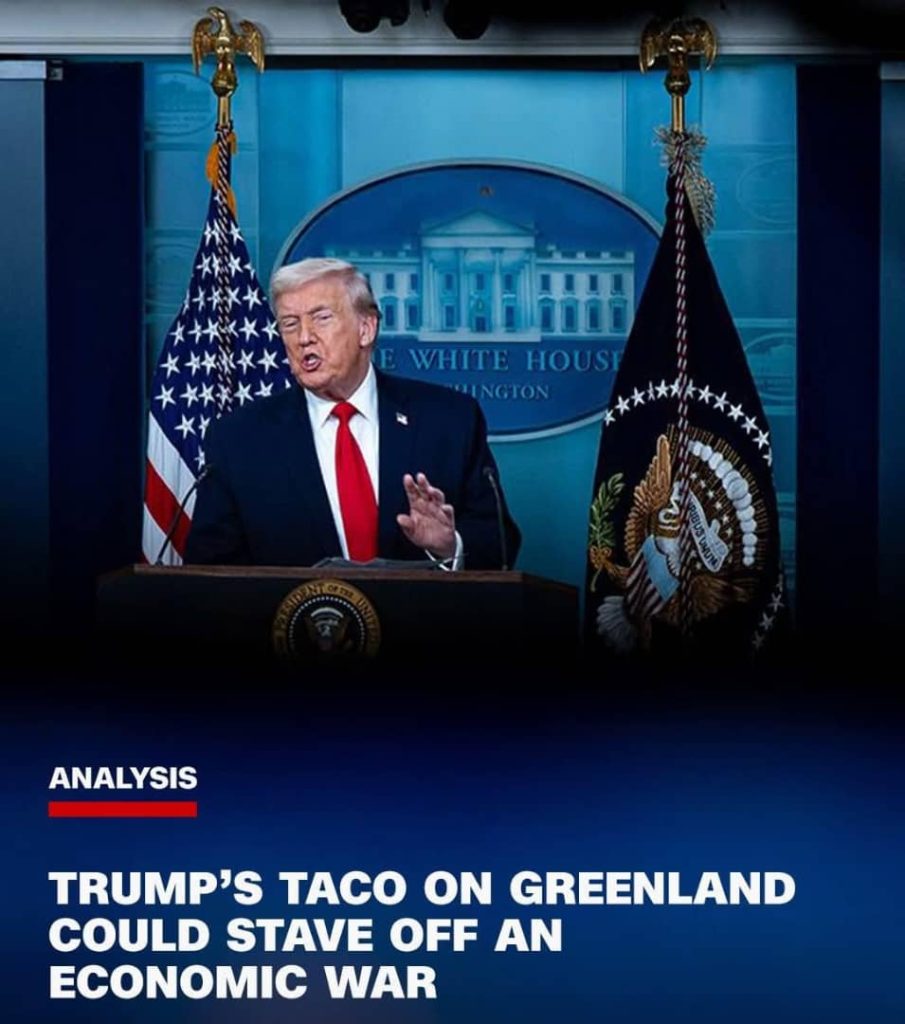
President Donald Trump has withdrawn his threat to impose tariffs on countries opposing his push to annex Greenland, easing fears of a full-scale economic confrontation between the United States and Europe.
Earlier, Trump had warned European nations that rejecting his Greenland proposal would result in heavy trade penalties. However, he later announced a framework for future discussions on Greenland and called off the proposed tariffs. The move marked another sudden reversal that helped calm escalating tensions with America’s key trading partners.
European leaders had viewed Trump’s demand as a serious red line, especially since Greenland is linked to a NATO ally. The European Union had even prepared emergency measures in response, including delaying approval of a major US–EU trade agreement and considering retaliatory tariffs.
The trade deal in question included a 15% tariff on most European exports to the United States,
with exemptions for certain sectors, alongside a large commitment by the EU to purchase American energy products. Despite this, many European policymakers saw the agreement as unbalanced and overly favorable to Washington.
Had the standoff continued, the EU was prepared to impose counter-tariffs worth billions of –
euros on American products, particularly those from politically sensitive regions.
Analysts warned that such measures could have had a noticeable economic and political impact in the United States.
The EU also considered activating its powerful anti-coercion mechanism, which would have
allowed it to restrict exports, introduce new tariffs, and limit US investments in Europe.
Although never used before, the tool is designed to respond to economic pressure from foreign governments.

For now, Trump’s decision to step back has prevented an immediate trade war.
However, European leaders remain cautious, signaling that while tensions have eased, the broader relationship remains fragile.
About the Author

Discover more from
Subscribe to get the latest posts sent to your email.