Overview:
Indirect elections in Somalia’s South West State concluded today in an organized manner, following days of political tension and confrontation with the Federal Government of Somalia. The process ended with the re-election of President Abdiaziz Laftagareen, who was officially sworn in after the vote.
Political Dispute:
A serious conflict had emerged between the South West administration and the federal government due to disagreements over the electoral process. While the regional administration insisted on holding an indirect election, the federal government pushed for a one-person, one-vote system.
Despite federal pressure, South West proceeded with its preferred model, bringing the electoral process to a close today.
Wider Context:
This follows a similar indirect election previously held in Jubaland, which the federal government rejected as illegitimate. Regional administrations across Somalia have largely opposed the federal plan to implement universal suffrage elections nationwide.
Political Reactions:
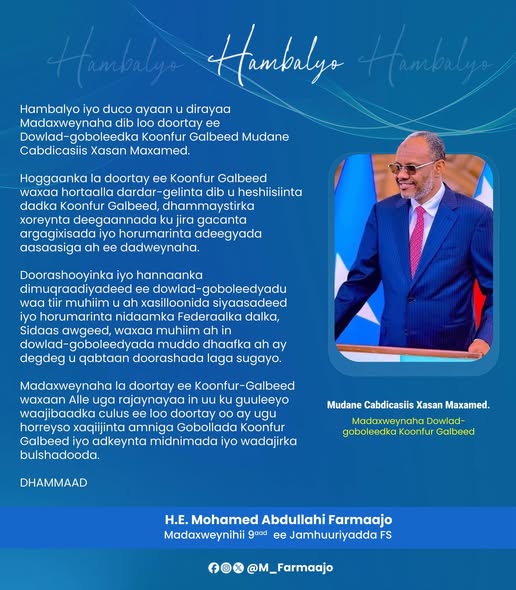
Former Somali President Mohamed Abdullahi Farmaajo congratulated Laftagareen on his re-election. Analysts believe the two leaders maintain a strong political alliance.
Federal Government Setback:
The situation is widely viewed as a setback for the federal government, which has so far failed to implement its plan for one-person, one-vote elections. No regional administration has complied with this directive.
Rising Military Tensions:
In recent days, the federal government has reportedly deployed elite units, including Haramcad, Gorgor, and national forces, into areas within South West State. This has raised concerns about the possibility of direct armed conflict between federal forces and regional authorities.
If conflict erupts and the federal government prevails, it is believed that it may attempt to remove the current regional leadership.
Security Developments:
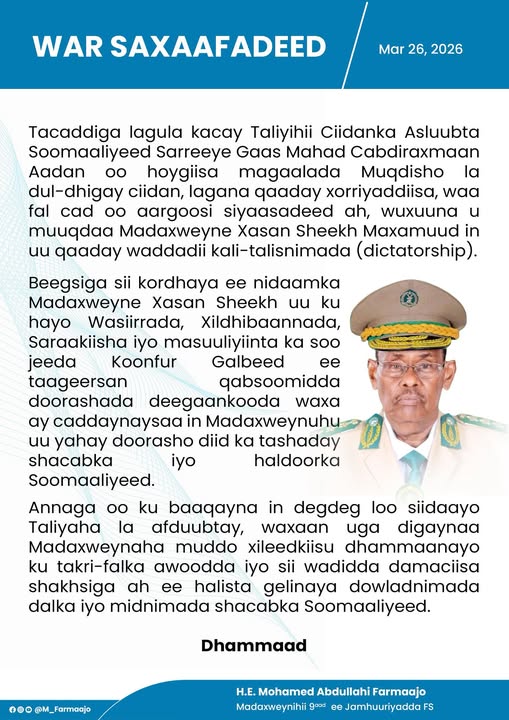
The commander of the Somali Custodial Corps was reportedly arrested following disagreements between the federal government and South West authorities. He is suspected of refusing orders to deploy his forces against the regional administration.
Analysis: What Happens If Conflict Breaks Out in Baidoa?
If the federal government launches an attack on Baidoa, the capital of South West State:
-Forces loyal to Laftagareen are heavily positioned around the city.
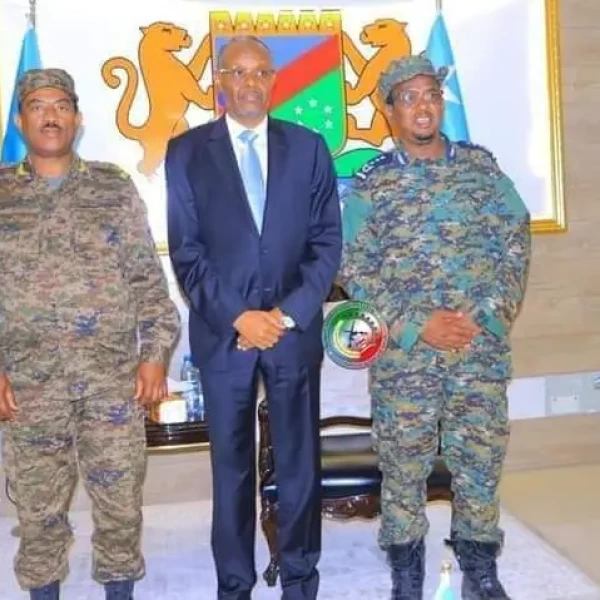
-Ethiopian troops are reportedly stationed داخل the city and are said to support the regional administration.
This raises critical questions:
-What happens if Somali federal forces clash with Ethiopian troops on Somali soil?
-Does Ethiopia have the legal right to intervene in an internal Somali conflict?
-Why did Farmaajo support this election but oppose others in similar situations?
Conclusion:
The federal government now faces increasing pressure to organize an inclusive electoral process. With the presidential election scheduled for May 15, 2026, political tensions remain high.
Opposition groups and regional states continue to reject the federal government’s push for direct elections. Analysts warn that failure to reach consensus could push Somalia toward internal conflict.
About the Author

Discover more from
Subscribe to get the latest posts sent to your email.