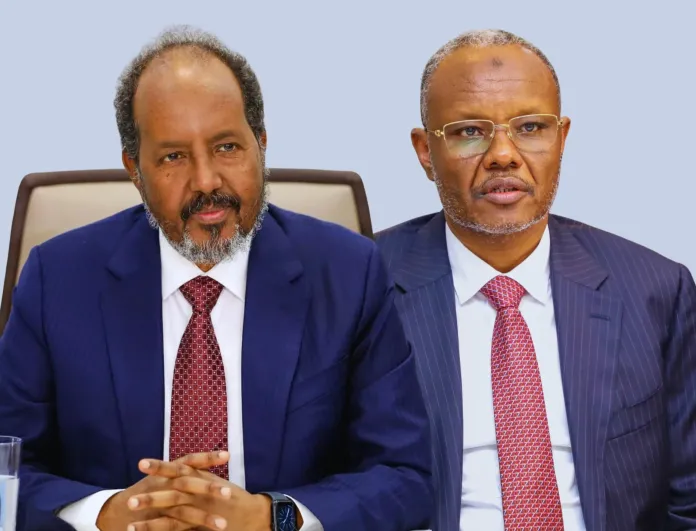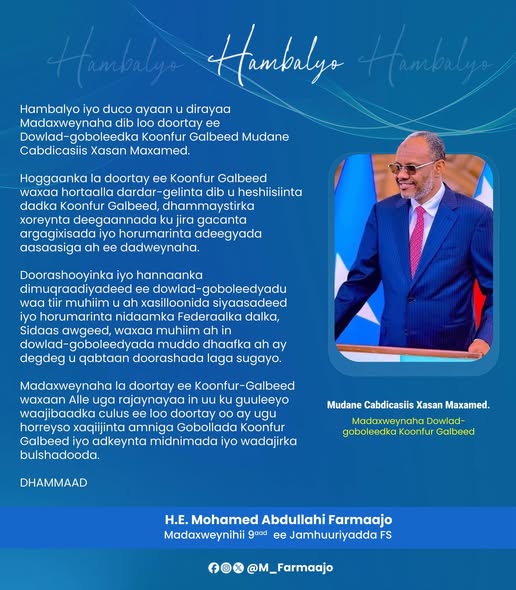
-A major political development has emerged from Baidoa, the interim capital of Southwest State, as reports indicate that President Abdiaziz Hassan Mohamed Lafta-Gareen has announced his resignation following days of intense fighting and rising political tensions.
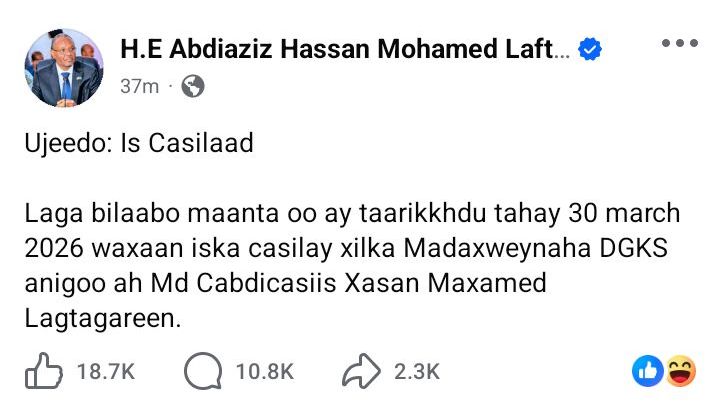
According to a statement circulated on his official Facebook page on March 30, 2026, Lafta-Gareen declared that he had stepped down from his position.
However, it is important to note that this claim has not yet been independently verified.
There are growing concerns among observers and the public that the account may have been compromised,
raising the possibility that the resignation announcement could be unauthorized or misleading.
Until official confirmation is provided through reliable government or institutional channels, the situation remains unclear.
This development comes against the backdrop of escalating clashes between forces loyal to the Federal Government of Somalia and troops aligned with the Southwest regional administration.
The conflict, which intensified in recent days, has centered around Baidoa and its surrounding areas, particularly after federal troops advanced from strategic positions outside the city.
Root Cause of the Conflict:
Disputed ElectionsAt the heart of the crisis lies a deeply contested electoral process.
The political standoff between the federal government and Southwest State leadership has been driven by disagreements over the timing, structure, and legitimacy of regional elections.
The federal government has pushed for reforms and alignment with national electoral frameworks,
while regional authorities have sought to maintain autonomy in managing their own political processes.
This lack of consensus created a volatile environment where political disagreements gradually escalated into military confrontation.
Analysts note that Somalia’s federal system, which divides authority between central and regional governments,
often produces such tensions when clear mechanisms for dispute resolution are lacking.
Why Lafta-Gareen’s Position WeakenedSeveral factors contributed to the apparent weakening of Lafta-Gareen’s political and military standing:
1. Loss of Strategic Military SupportOne of the most decisive elements in the unfolding crisis has been the position taken by Ethiopian forces stationed in Baidoa.
These troops, which operate under both bilateral arrangements and the African Union mission, reportedly declined to engage in combat against Somali federal forces.
This effectively left Southwest State forces without a critical layer of external military support.
2. Federal Military AdvantageThe federal government’s ability to mobilize a large and coordinated force gave it a clear tactical edge.
Reports indicate that approximately 2,000 troops were deployed toward Baidoa, creating significant pressure on regional defenses.
This level of organization suggests a well-planned operation aimed at asserting federal authority.
3. Political IsolationLafta-Gareen’s administration appears to have faced increasing political isolation.
With limited backing from key stakeholders and growing internal divisions, maintaining control became increasingly difficult.
The lack of unified support within the region may have accelerated the collapse of resistance.
4. Diplomatic Constraints on External ActorsThe broader geopolitical context also played a role.
Relations between Somalia and Ethiopia have been strained since the controversial 2024 memorandum of understanding between Ethiopia and Somaliland.
As a result, Ethiopia has been cautious about engaging in actions that could escalate tensions with the Somali federal government.
Civilian Impact and Growing UncertaintyAs the conflict intensified, civilians in Baidoa began to feel the immediate effects.
Reports indicate that many residents, including business owners, fled parts of the city fearing for their safety.
The sound of gunfire and the presence of armed forces created an atmosphere of fear and uncertainty.The humanitarian implications of the conflict cannot be overlooked.
Continued instability could disrupt essential services, displace communities, and worsen an already fragile economic situation in the region.
Is the Resignation Confirmed?Despite the viral nature of the resignation post, key questions remain unanswered.
The possibility that the Facebook account was hacked has gained traction, especially given the high-stakes political environment.
In Somalia and other conflict-affected regions, misinformation and cyber interference are not uncommon during critical moments.
For now, analysts urge caution in interpreting the announcement.
Official confirmation from government institutions, credible media outlets, or direct public appearances by Lafta-Gareen will be necessary to establish the authenticity of the claim.
What Happens Next?If the resignation is confirmed, it could mark a turning point in the political dynamics of Southwest State.
A leadership vacuum may trigger new negotiations, potential interim arrangements, or even further instability depending on how stakeholders respond.On the other hand,
if the announcement is proven false,
it would highlight the growing role of information warfare in modern conflicts, where digital platforms can be used to shape narratives and influence outcomes.
Broader ImplicationsThe situation in Baidoa reflects deeper structural challenges within Somalia’s governance system.
The balance of power between the federal government and regional states remains unresolved, often leading to recurring crises.
Without clear frameworks for managing political disagreements, similar conflicts are likely to emerge in the future.
At the same time, the crisis underscores the importance of institutional trust and credible communication channels.
In moments of uncertainty, access to verified information becomes critical not only for decision-makers but also for the general public.
ConclusionThe reported resignation of President Lafta-Gareen—whether confirmed or not—comes at a critical moment for Southwest State and Somalia as a whole.
The combination of military pressure, political disputes, and diplomatic complexities has created a highly volatile situation.As events continue to unfold,
the focus will remain on verification, de-escalation, and the search for a sustainable political solution. For now, one thing is certain:
Baidoa stands at the center of a defining moment in Somalia’s ongoing state-building journey.
About the Author

Discover more from
Subscribe to get the latest posts sent to your email.