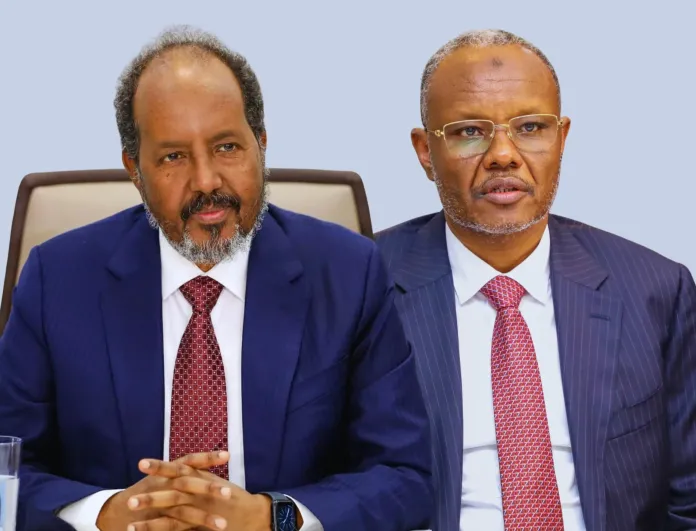
A rapidly escalating security situation is unfolding in Baidoa, the interim administrative capital of Southwest State, as intense fighting between Somali Federal Government forces and regional troops continues to intensify.
The clashes, which began on the outskirts of the city, signal a dangerous turning point in an already fragile political and military landscape.
According to emerging reports, heavily armed federal forces advanced from an area known as Daynuunay, located approximately 30 kilometers from Baidoa.
This strategic movement appears to be part of a broader operation aimed at consolidating federal authority in the region.
The scale and coordination of the troop movement suggest a premeditated plan rather than a spontaneous confrontation.
As the fighting drew closer to the city, fear quickly spread among civilians. Early this morning, several local business owners and residents began fleeing Baidoa,
concerned about the deteriorating security situation. Eyewitnesses described scenes of panic, with sporadic gunfire echoing across neighborhoods, further amplifying public anxiety.
The displacement of civilians at this stage highlights the potential for a humanitarian crisis if the conflict continues unchecked.
A critical and potentially decisive factor in the unfolding situation is the stance taken by Ethiopian forces stationed in Baidoa.
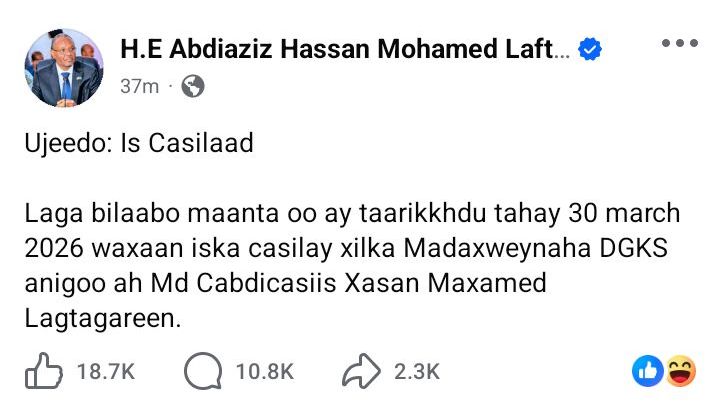
According to credible sources, Ethiopian military officials have informed Southwest State President Abdiaziz Lafta-Gareen that they will not engage in combat against Somali federal troops if they enter the city.
This position marks a significant shift from previous engagements and underscores the complexity of regional alliances.
The Ethiopian decision appears to be heavily influenced by diplomatic considerations.
Direct confrontation with Somali federal forces could trigger serious repercussions, not only bilaterally but also within the broader framework of regional security cooperation.
Ethiopia, which maintains a presence in Somalia under both African Union mandates and bilateral arrangements,
is likely seeking to avoid actions that could escalate tensions with Mogadishu.
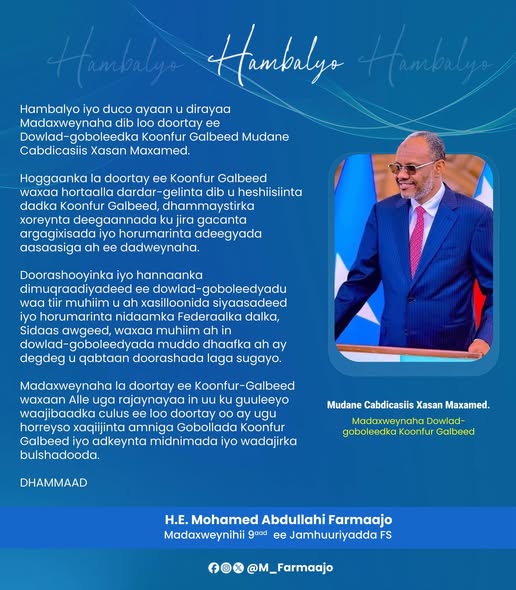
This development places President Lafta-Gareen in an increasingly precarious position. Without external military backing, his administration faces mounting pressure both politically and militarily.
Reports indicate that efforts are underway to find a viable exit strategy for the regional leader, suggesting that behind-the-scenes negotiations may already be in motion.
Meanwhile, the Federal Government has reportedly mobilized approximately 2,000 troops to reinforce positions around Baidoa.
This significant deployment reflects the seriousness of the operation and signals the government’s determination to assert control.
Analysts believe that this move could be part of a broader strategy to reconfigure power dynamics within Somalia’s federal system.
The current crisis cannot be viewed in isolation. It is deeply intertwined with ongoing diplomatic tensions between Somalia and Ethiopia,
particularly following the controversial memorandum of understanding signed between Ethiopia and Somaliland in 2024.
That agreement significantly strained relations between Mogadishu and Addis Ababa, creating an environment of mistrust that continues to influence military and political decisions.
Ethiopia’s presence in Baidoa, both within and outside the African Union Support and Stabilization Mission in Somalia (AUSSOM), remains a sensitive issue.
While Ethiopian troops have historically played a role in stabilizing certain regions, their involvement has also been a source of contention, especially when perceived as interfering in internal Somali affairs.
A direct military clash between Ethiopian forces and Somali federal troops would carry severe consequences.
Such an outcome could lead to Ethiopia’s removal from AUSSOM and potentially force a complete withdrawal from Somalia.
This scenario would not only alter the security architecture of the region but also create new vulnerabilities that extremist groups could exploit.
Comparisons are already being drawn to the events of 2018, when Ethiopian forces supported the Federal Government in Baidoa during the controversial arrest of Mukhtar Robow.
At that time, Ethiopia’s alignment with federal authorities was clear, and the geopolitical risks were relatively lower. Today, however, the situation is markedly different.
The diplomatic landscape has shifted, and the stakes are considerably higher.From a broader perspective, the ongoing conflict in Baidoa reflects deeper structural challenges within Somalia’s federal system.
The balance of power between the central government and regional administrations remains unresolved, often leading to periodic confrontations.
Without a comprehensive political settlement, such conflicts are likely to recur.
The immediate priority should be de-escalation. Continued fighting risks not only civilian lives but also the stability of the entire region.
Diplomatic channels must be urgently activated to prevent further escalation and to facilitate dialogue between the conflicting parties.
In the coming days, the trajectory of this conflict will depend on several key factors: the willingness of both sides to negotiate,
the role of external actors, and the response of the international community. What is clear, however,
is that the situation in Baidoa represents a critical test for Somalia’s political and security institutions.
If managed carefully, it could pave the way for a more balanced federal arrangement.
If mishandled, it risks deepening divisions and undermining years of state-building efforts.
About the Author

Discover more from
Subscribe to get the latest posts sent to your email.